
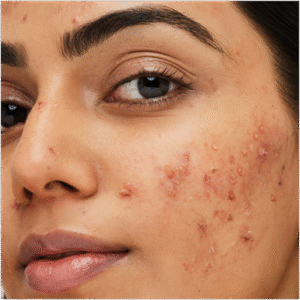
If you constantly deal with painful pimples around your jawline, chin, cheeks, or neck — especially before periods — your acne may not be “normal acne.” It could be hormonal acne linked to PCOS (Polycystic Ovary Syndrome).
Many women feel frustrated because their acne improves temporarily with creams or medicines but keeps returning after a few weeks or months. The reason is simple: unless the hormonal imbalance is addressed, acne tends to recur.
At Dr.Shweta Vijay Nakhawa provides personalized treatment plans for hormonal acne and PCOS-related skin concerns.
What Is PCOS?
PCOS (Polycystic Ovary Syndrome) is a common hormonal disorder affecting many women during their reproductive years. It causes hormonal imbalance, irregular periods, weight gain, excess facial hair, hair thinning, and persistent acne.
In PCOS, the body produces higher levels of androgen hormones (male hormones), which stimulate excess oil production in the skin. This extra oil clogs pores and triggers acne breakouts.
Why Does Hormonal Acne Keep Coming Back?
Unlike teenage acne, hormonal acne is deeply connected to internal hormonal fluctuations. Even if surface pimples heal, the underlying hormonal imbalance can continue triggering new breakouts.
Common Reasons for Recurring Hormonal Acne
Excess Oil Production
PCOS increases androgen hormones, leading to overactive sebaceous glands and oily skin.
Clogged Pores
Dead skin cells mix with excess oil, blocking pores and causing blackheads, whiteheads, and pimples.
Chronic Inflammation
Hormonal imbalance can increase skin inflammation, resulting in painful cystic acne.
Insulin Resistance
Many women with PCOS also have insulin resistance, which can worsen hormonal acne and increase breakouts.
Stress & Poor Lifestyle
Stress, lack of sleep, junk food, and irregular routines may worsen hormonal fluctuations and acne severity.
Signs Your Acne Could Be Hormonal
You may have hormonal acne if you notice:
- Acne around chin and jawline
- Painful cystic pimples
- Acne worsening before periods
- Oily skin with large pores
- Acne along with irregular periods
- Facial hair growth or hair thinning
- Sudden adult acne after age 25
If these symptoms sound familiar, consulting an experienced dermatologist becomes important.
How PCOS-Related Acne Is Diagnosed
A dermatologist usually evaluates:
- Acne pattern and severity
- Hormonal history
- Menstrual cycle irregularities
- Family history
- Lifestyle factors
- Associated symptoms like pigmentation or hair growth
Sometimes blood tests or gynecological evaluation may also be advised for complete hormonal assessment.
According to Dr.Shweta Vijay Nakhawa, understanding the root hormonal cause is essential for long-term acne control rather than temporary relief.
Best Treatments for Hormonal Acne & PCOS Acne
At Dr.Shweta Vijay NakhawaClinic, treatment plans are customized based on skin type, acne severity, hormonal imbalance, and acne scars.
Medical Acne Treatments
Topical Medications
Prescription creams and gels help reduce oil production, inflammation, and bacterial growth.
Oral Medications
Certain medicines help balance hormones and reduce severe acne breakouts.
Chemical Peels
Chemical peels help exfoliate skin, unclog pores, reduce pigmentation, and improve acne marks.
Laser & Advanced Acne Therapies
Advanced dermatology procedures can reduce inflammation and improve acne scars effectively.
Lifestyle & Diet Guidance
Managing stress, maintaining healthy sleep, regular exercise, and reducing high-sugar foods can help control PCOS symptoms naturally.
Dr.Shweta Vijay Nakhawa offers advanced and personalized solutions for long-term acne management.
Can Hormonal Acne Be Permanently Controlled?
Hormonal acne can be effectively managed and significantly reduced with proper diagnosis, consistent treatment, and lifestyle changes.
The earlier treatment begins, the lower the chances of:
- Deep acne scars
- Skin pigmentation
- Emotional stress
- Recurrent cystic acne
Many patients experience major improvements with a combination of dermatological care and hormonal management.
When Should You Visit a Dermatologist?
You should consult a dermatologist if:
- Acne is painful or cystic
- Acne leaves scars or marks
- OTC creams are not working
- Acne keeps returning
- You suspect PCOS symptoms
- Breakouts affect confidence or mental well-being
Choosing the Dr.Sweta Vijay Nakhawa can help you identify the real cause behind persistent acne and receive targeted treatment.
Frequently Asked Questions (FAQs)
Is PCOS acne different from normal acne?
Yes. PCOS acne is hormone-driven and usually appears around the jawline, chin, and lower face. It often becomes chronic and recurrent.
Can PCOS acne go away naturally?
Lifestyle improvements may help reduce symptoms, but professional treatment is often needed for long-term acne control.
Which doctor should I consult for hormonal acne?
A dermatologist experienced in hormonal acne and PCOS-related skin conditions can guide proper treatment.
Is acne treatment safe for sensitive skin?
Yes. Customized dermatology treatments are designed according to your skin type and acne severity.
Can acne scars from hormonal acne be treated?
Yes. Chemical peels, laser treatments, and scar-reduction procedures can help improve acne scars significantly.
Conclusion
Hormonal acne caused by PCOS is more than just a cosmetic concern — it reflects internal hormonal imbalance. Ignoring recurring acne may lead to long-term scarring, pigmentation, and emotional distress.
With expert guidance, proper skincare, and advanced dermatology treatments, hormonal acne can be controlled effectively.
If you are searching for an acne specialist doctor in Thane, best doctor for acne treatment in thane, or advanced Acne Treatment in Thane, consult Dr.Sweta Vijay Nakhawa for personalized acne and PCOS skin management.
Tired of Acne That Keeps Coming Back?
Book your consultation with Dr.Sweta Vijay Nakhawa today and get expert care for hormonal acne, PCOS-related breakouts, acne scars, and oily skin concerns.
📞 Schedule your appointment now for advanced and personalized Acne Treatment in Thane.